
ContentsChapter IV
Casteria
Nine towns, nine roads, and fourteen kinds of weather. A day in Casteria lasts one hour.

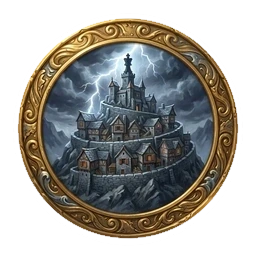
Nine towns
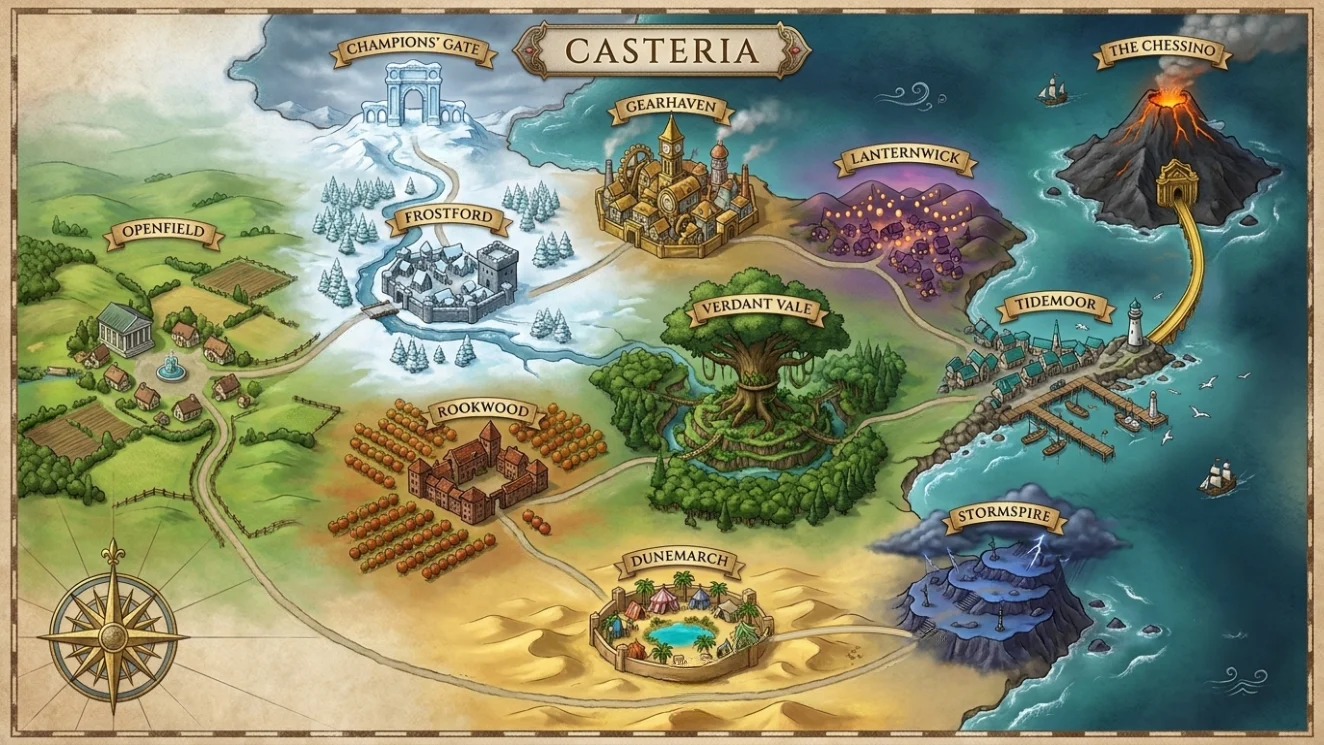
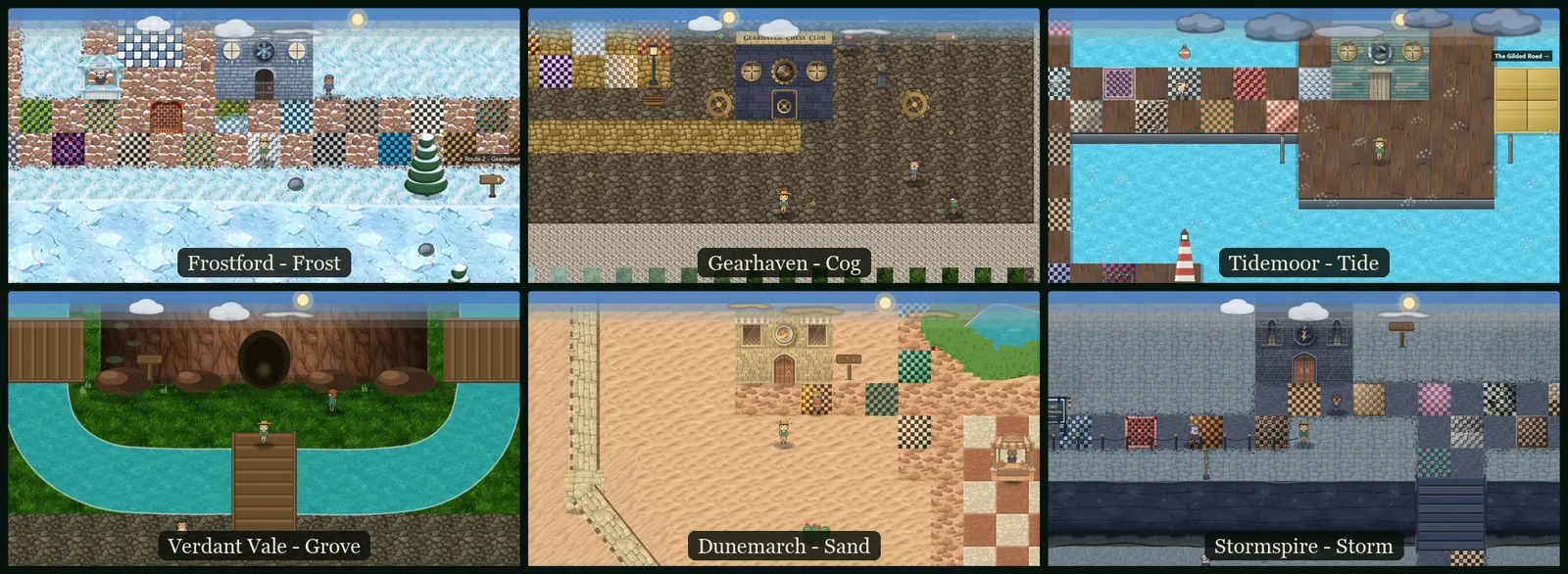
Frostford has glacier lanterns, Gearhaven is a rainy clockwork city, Lanternwick stays in violet dusk, and Stormspire has thunderstorms.
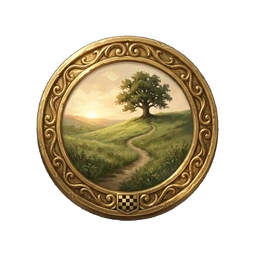
Openfield
Meadow home town, where you live and where the game begins.
Frostford
An icy town with auroras, the first Chess Club and your first Sigil.
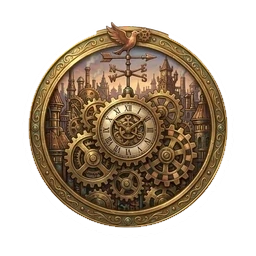
Gearhaven
A brass clockwork city in soft drizzle and lamplit wet cobbles.

Lanternwick
Violet dusk, drifting blossom, and lanterns lit along every boardwalk.
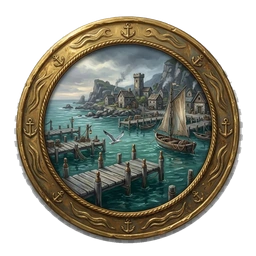
Tidemoor
Fog, drizzle and sea spray off the harbour.
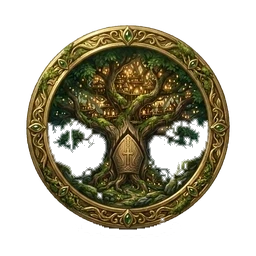
Verdant Vale
A forest town in the roots of the Great Tree.
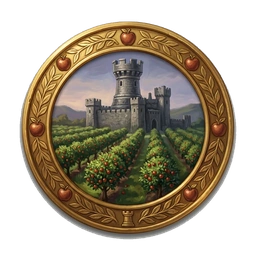
Rookwood
An autumn town where falling leaves are the weather.
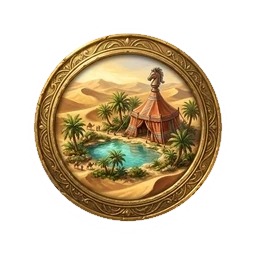
Dunemarch
A desert town with heat shimmer and sand devils.
Stormspire
A storm-wracked cliff town, and the last club before the Gate.
The clock
One real hour is one day in Casteria: half an hour of daylight, then half an hour of night. Dawn is on the hour, noon at quarter past, dusk at half past, and midnight at quarter to. The moon follows the real 29½-day lunar cycle.
Every outdoor area has a live sky across the top of the screen. Six clouds drift across it and change with the weather: white cumulus on a clear day, steel nimbus in the rain, stratus in a blizzard, gold cirrus in a dust storm. Sunrays also appear, and an aurora with three bands is visible over the ice.
Fourteen kinds of weather
Snow, blizzard, rain, drizzle, thunderstorm, hail, fog, dust storm, sea spray, heat shimmer, falling leaves, drifting blossom, and falling stars in one secret place. Thunderheads light up from inside, and sun through rain puts a rainbow up opposite the sun.
The weather changes about every three real minutes, and each town gets its own: blizzards in Frostford, heat shimmer in Dunemarch, sea spray in Tidemoor. Changes are gradual, and clear skies are still the most common. The board stays clear in any weather.
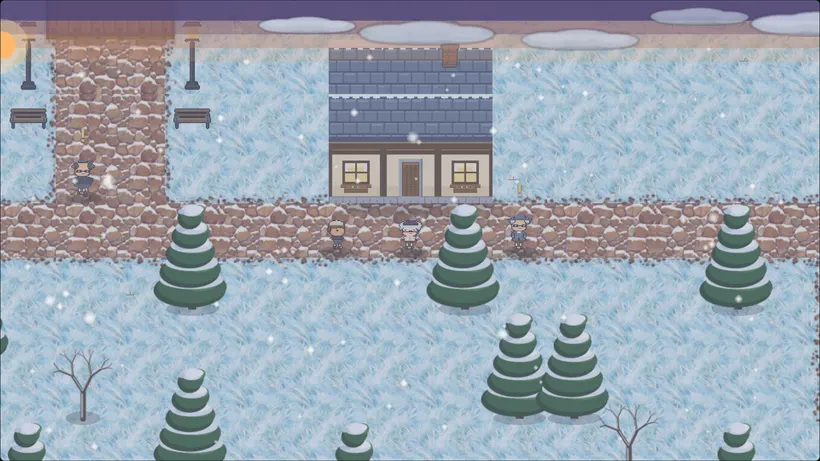
Frostford 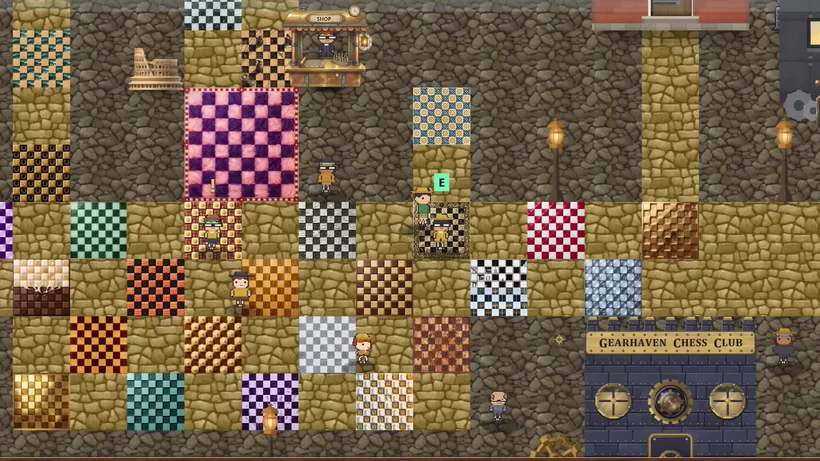
Gearhaven 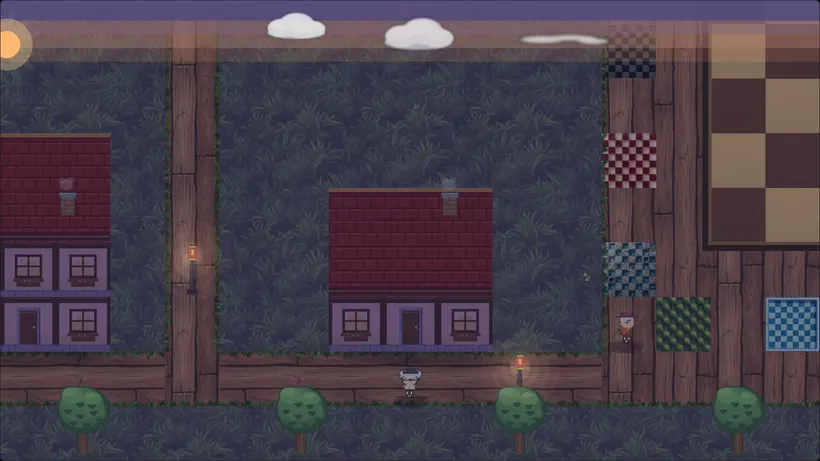
Lanternwick
The bar along the bottom of the screen
One strip, always on screen, with four readings:
Then three buttons: the map (M), the sound (N) and the menu (I).
The minimap
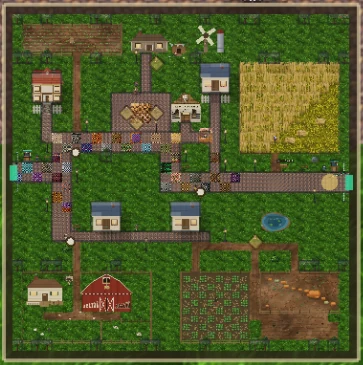
Press M, or Y on an Xbox controller, to open the minimap in the corner. It is drawn at your screen’s resolution and shows buildings, trees, water, paths and plazas, with a moving dot for your position. Its appearance stays the same regardless of the time or weather.
 Openfield
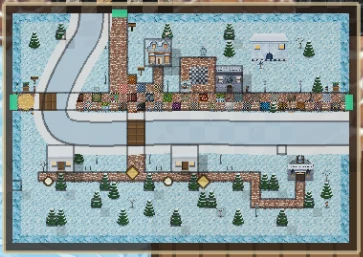 Frostford
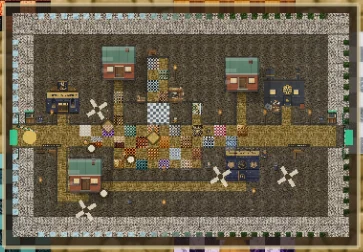 Gearhaven
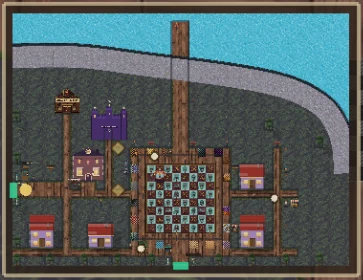 Lanternwick
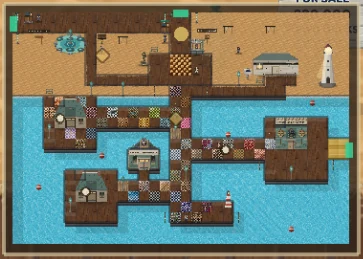 Tidemoor
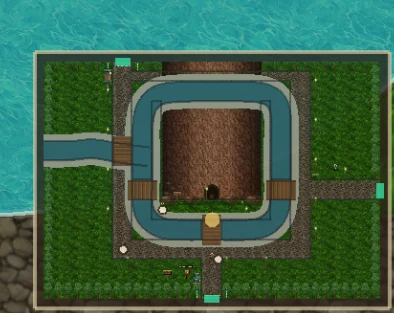 Verdant Vale
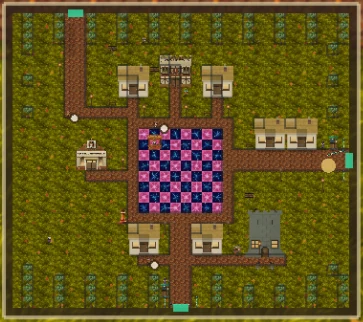 Rookwood
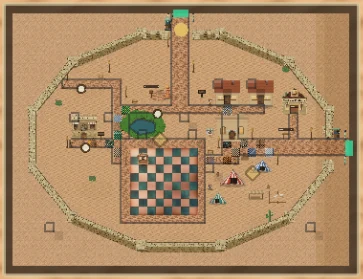 Dunemarch
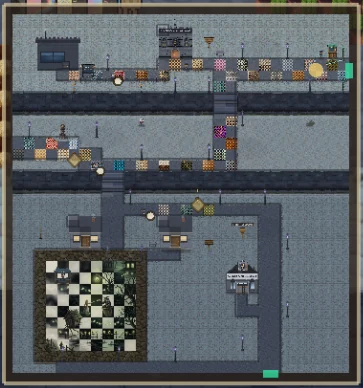 Stormspire
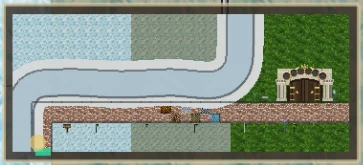 The Championship Gate
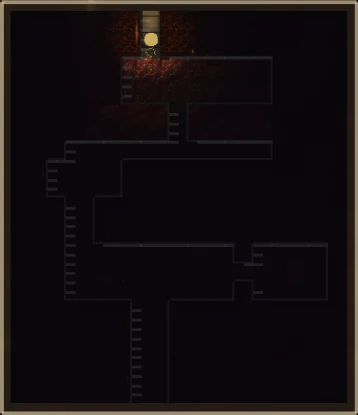 The Emberway
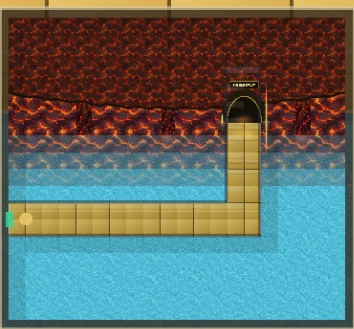 The Gilded Road
the second trailer
The World
Nine towns and the roads between them, the weather and the clock, 202 lessons, 589 boards, and the six Sigils that open the Championship Gate.
Audio description and transcript
The World with audio description
This version describes the action and on-screen text with a computer voice. The original music plays quietly underneath.
Transcript
00:00.000–00:02.567. Title: ‘Pocket Pawns.’
00:02.567–00:05.567. The player walks along Stormspire’s stone streets beside purple lamps, the Chess Club and a sign toward the Ring Road.
00:05.567–00:09.567. The illustrated map of Casteria shows towns, roads, mountains, forests, desert and coast. Caption: ‘Nine towns. One championship.’
00:09.567–00:12.567. The player crosses wooden walkways and patterned chessboard paths over the bright water of Tidemoor’s harbour.
00:12.567–00:14.567. The player crosses sandy streets in Dunemarch, past buildings, lamps and a sign toward Rookwood.
00:14.567–00:19.567. The player passes a house in autumnal Rookwood and enters a park. Opponents wait behind outdoor chessboards beside branching stone paths.
00:19.567–00:23.567. Card: ‘Real weather, and a real clock,’ with ‘one real hour is one full day in Casteria.’
00:23.567–00:27.567. Professor Alderwood’s Lesson Hall shows a chessboard in its starting position, an explanation and a multiple-choice question. Caption: ‘202 lessons that teach real chess,’ with ‘starting from which square is which.’
00:27.567–00:33.567. Rows of varied chessboard illustrations slide across the screen. Caption: ‘589 chessboards,’ with ‘can you collect them all?’
00:33.567–00:36.567. Six round Sigils appear: a snowflake, a cog, a wave, a leaf, a golden emblem and a lightning bolt. Caption: ‘Six Sigils to win,’ with ‘beat all six Chess Clubs to claim them.’
00:36.567–00:41.567. A battle against The Prepared Stranger shows a chessboard between two team lists. Caption: ‘Out-level your opponents and you get hints,’ with ‘fall behind, and they can refuse the move you just played.’
00:41.567–00:45.567. The viewpoint moves along a wooden treetop walkway above clouds and distant peaks. Characters stand beside windows and doors in the enormous tree trunk. Caption: ‘And three places in full 3D.’
00:45.567–00:49.567. The view travels toward a domed brick hall along a broad stone path. Chess tables and seated characters stand beside it, with green hedges and mountains beyond.
00:49.567–00:56.567. Six Sigils circle an illustration of a blue-lit locked gate in a gold frame. Captions read ‘Six Sigils open the gate’ and ‘One championship,’ with ‘where all of it leads.’ The image fades to black.
00:56.567–01:05.300. The crowned-pawn crest appears above ‘Pocket Pawns’ and ‘A piece-collecting chess RPG.’ Closing credits identify development footage subject to change, Stockfish 18 under the GNU General Public License v3, the original Pocket Pawns soundtrack, USK 12 and ClassInd 12 ratings, and © 2026 Pocket Pawn Games.
the three places in 3D
Three 3D areas
Most of Casteria is 2D, viewed from above. Three areas are 3D. The Canopy is a treetop walkway above the mist. The Roost is the inn’s top suite, with lava-light in the windows. The Grand Hall is where the championship is decided. None of the three are in the free demo.
The Great Tree Canopy The Roost, the suite over the lava The Grand Hall, where the championship is decided
the six chess clubs






Win a Sigil at each of the six Chess Clubs to unlock the World Championship.
also in the game
Houses, the Knight’s Tour, and more
- You can buy a houseAn agency in Frostford sells nine homes, one in every town: a ranch in the meadow, an ice house, a loft in Gearhaven, a beach house, a cliff house. They start at 40,000 Pawn Bucks, and you can walk in and decorate.
- The Knight’s Tour MeadowA sunken field of 64 stone pads past Verdant Vale. You walk the knight’s tour yourself: every step is a knight move onto a pad you have not stood on. Completing the tour opens a stairway beneath the middle four pads.
Also: 26 Steam achievements, a character face you build yourself before leaving home, and an Extras tab on the title screen with a chess course, a companion book, the soundtrack and every puzzle in the game.
The free demo includes Openfield and Frostford. Your save carries into the full game.